Home » Chemical Iran Blogs

Chemical Iran Blogs

sodium sulphide yellow flakes

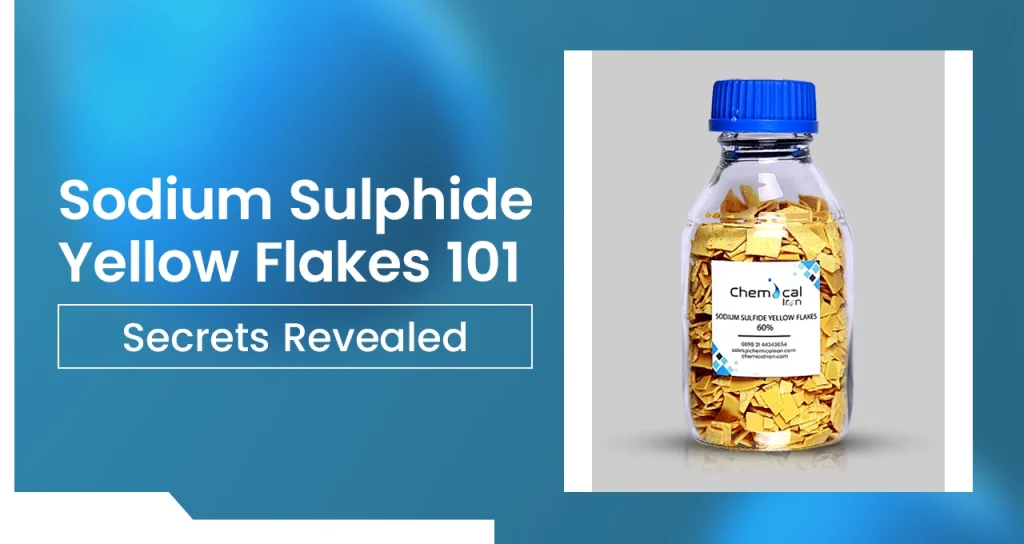
Sodium Sulphide Yellow Flakes 101: Secrets Revealed

Sodium sulfide yellow flakes are an inorganic chemical compound with a 60% concentration of sodium sulfide and a low 10 parts per million (PPM) impurity. This water soluble alkaline substance comes colorless and with a rotten egg odor if contacted with damp air. The most common uses of this golden chemical compound are found in industrial sectors for various applications. And, if you are seeking a sodium sulfide yellow flake supplier, understanding its uses, precautions and adverse effects is crucial before using it in any industrial application.  Interested? Keep reading. Versatile Uses of Sodium Sulfide Yellow Flakes Let’s begin understanding the versatility of sodium sulfide flakes (yellow) from its industrial uses. Pulp and paper industry This chemical compound has a versatile use in the paper and pulp industry in the production of high-quality pulp and paper to break down lignin. Yellow sodium sulfide flakes act as cooking liquor here in wood fibers. Manufacturers dissolve this chemical substance and cook wood chips to break down lignin, leading to pulp and paper formation.  Textile industry Sodium sulfide flakes (yellow) act as a key ingredient in the textile industry in the printing and dyeing process. Since this chemical substance is easily dissolved in water, it is convenient to use in producing textiles as a reducing agent to transform organic dyes into soluble forms, so it penetrates textiles perfectly.  Leather industry Sodium sulfide yellow flakes are an effective chemical compound to be used in the dehairing process in the leather industry. In leather production, this chemical substance helps in the tanning process to eliminate unwanted flesh, hair, and other impurities from the skin and hides.  Wastewater treatment Wastewater often includes heavy metals like cadmium, copper, lead, and metal sulfides. To eliminate these heavy metals and ensure environmental protection, sodium sulfide flakes (yellow) are used in wastewater treatment. When it comes into contact with these heavy metals, it forms insoluble sulfides, which are removable through filtration.  Chemical synthesis Sodium sulfide yellow flakes are a versatile chemical precursor used in the industrial chemical synthesis process of other chemical compounds and substances. It acts as a reagent in the process due to its high solubility in water. For instance, its uses in converting halides to sulfides, diminishing nitro compounds to amines, or triggering metal sulfides are noticeable.  Other uses: Safety Precautions for Sodium Sulfide Yellow Flakes for Industrial Application If you or your employees are using sodium sulfide flakes (yellow) for any kind of industrial application as mentioned above, it’s crucial to take safety precautions to prevent injuries and accidents. For example: If not handled properly, exposure to this chemical compound can result in skin irritation, flaking, and redness, while it can form poisonous gas like hydrogen sulfide if it comes into contact with acid. In any such case, it’s important to reach out to your nearest pharmacy or healthcare center.  In Conclusion We hope these details will help you with the industrial application for sodium sulfide yellow flakes. And, if you are seeking a reliable sodium sulfide flake manufacturer, supplier, and distributor, Chemical Iran is here to meet your supply needs. We manufacture and supply only the highest quality and pure sodium sulfide yellow flakes at 60% 10 PPM impurity level for industrial applications, alongside other chemical compounds at competitive prices. Get a quote now for bulk orders!  

Sodium Sulphide Yellow Flakes 101: Secrets Revealed Read More »
Chemical manufacturer 2 copy

Top 6 Considerations When Partnering with the Right Antifreeze Chemicals Manufacturer

Cold climates are always a concern for industrial sectors, from automotive to aerospace to manufacturing, due to freezing problems, whether it’s vehicle engines or machinery. The machines’ temperature keeps decreasing and ends up freezing unless a proper antifreeze solution is applied to regulate it.  But, when it comes to antifreeze chemicals, you can’t just pick anything. After all, not every antifreeze solution is created equally. It’s important to choose the right antifreeze chemical manufacturer before investing so you can maintain top-notch performance and longevity. Here’s how to find the best fit for your needs.  Key Factors to Consider When Selecting an Antifreeze Chemical Manufacturer When you want to provide the best antifreeze protection to machinery or vehicles to ensure optimal performance even during cold weather, it’s crucial to decide on a reliable manufacturer for premium antifreeze chemical solutions. And, here’s what to consider for that: Supply chain reliability When looking for the ultimate antifreeze solution for industrial applications, it’s always worth researching supply chain reliability. In this way, you can rest assured of supply chain consistency during bulk orders while getting the antifreeze chemicals tailored to your needs for improved performance and an extended lifespan of machinery, like coolants or vehicle engines. So, when partnering with an antifreeze chemical manufacturer and supplier, make sure to look into this.  Expertise and experience When looking for a tailored antifreeze chemical solution not just to prevent freezing of a machine’s coolant systems but to improve its performance, we say to research the experience and expertise of the manufacturer. With an experienced manufacturer of antifreeze chemicals, you can access a team of experts with a deep understanding of antifreeze formulations, requirements, and industry challenges. Make sure you check the proven track record of their antifreeze chemical solutions before investing in them.   Technical support Excellent technical support is crucial when getting antifreeze chemical solutions, especially when it’s the first time. With a reliable manufacturer, you can get proper guidance throughout the process, from product selection to application to troubleshooting and problem-solving. Moreover, with a knowledgeable technical representative, you can reach out to them on any issues or queries for further assistance.   Compatibility and performance Before investing in antifreeze chemicals from any manufacturer, it’s important to ensure that their products are compatible with your industrial applications, while its performance consideration is another factor to look into. Make sure the antifreeze chemical solution you are buying has the exact heat transfer properties, boiling point elevation, and freezing point depression needed for the specific applications.  Quality assurance When it comes to antifreeze chemicals, always prioritize quality; the solution must meet industry standards in terms of concentration and quality. Also, check if the antifreeze chemical manufacturer you choose maintains rigorous testing during manufacturing to meet industry standards and holds relevant certification from the industrial body, like ISO 9001, to guarantee consistency and product quality.  Price and value Pricing is also a considerable factor when ordering antifreeze chemicals in bulk from any manufacturer. So, always consider the overall costs, including the initial price, transportation charges, and additional costs, and check if it goes with your budget.  In Conclusion Looking for a reliable antifreeze chemical manufacturer and supplier? Count on us. At Chemical Iran, we offer industry-leading chemical solutions for antifreeze protection, ensuring optimal performance and protection for your industrial machinery and vehicles, even in extreme conditions. We have expertise in providing tailored antifreeze formulations to enhance machinery performance and longevity that meet industry standards. Whether you need us for any technical guidance for antifreeze chemical application or machinery performance, our team is here to help you out.  Order now or get a quote today!

Top 6 Considerations When Partnering with the Right Antifreeze Chemicals Manufacturer Read More »

detergent chemicals distributor

Finding the Right Supplier for High-Grade Chemicals for Detergent and Soap Business

The Global Soap and Detergent market is booming like never before. It is anticipated that this industry will grow at a considerable rate between 2024 and 2031. Well, when talking about the last year 2023, the market has already shown significant growth – all because of the rising adoption of strategies by key players. Studies even predict that in the coming years, the soap and detergent market will rise in areas like North America, Europe, Asia Pacific, Middle East and Africa.  The soap and detergent industry generally produces soap, synthetic and inorganic detergents and glycerin from plant and animal sources and more. In this 2024, the main types of soap and detergent products are(category-wise): If you’re in the soap and detergent business, you know how crucial it is to use top-notch chemicals. Whether you own a factory or work for a company, you understand the importance of advanced chemical solutions required for the production of high-quality Soaps & Detergents. You need high-performing chemicals that facilitate making a powerful soap of detergent that offers superior cleaning performance and optimal results.  And, all this can be possible if you approach a top-level and reliable soap and detergent chemical distributor or supplier.  Getting Started First thing you need to is to identify your need  Are you making a laundry soap that tackles tough stains? A dish soap that cuts through grease? Or, maybe a gentle bar soap for sensitive skin? Knowing your goal helps you pick the right chemicals. Think about the specific cleaning challenges your product should solve. This step is really important because it guides all your later decisions. Next, stay updated on industry trends  The detergent and soap industry is constantly evolving. There are new technologies and ingredients that other companies are using to improve the quality of the product. New ingredients and technology are kinder to the planet or save money. So, you need to stay updated on these newest trends. You can visit industry events, read trade magazines and chat with others in the business. This helps you stay competitive and maybe even spot the next big thing before others do.  Consider environmental and health impacts People nowadays care more and more about how products affect their health and the environment. That’s why it is necessary for you to go with the chemicals that break down naturally and aren’t toxic. They should clean well without hurting people or the planet. However, the rules and regulations can be different from region to region, so you need to be aware of them. Using safe, eco-friendly chemicals for your soap and detergent can also be good for your business too – as more customers look for products they can feel good about using. Never compromise quality for cost Yes, we all know, cost is an important consideration when it comes to choosing chemicals for detergent and soap. Low-cost ingredients may reduce your production costs, but here you are compromising the effectiveness and safety of your product. So, eventually, you will lose customers. It’s about finding the right balance between cost and quality. Investing in higher-quality chemicals will result in more efficient products and more sales. Find the most reputable detergent and soap chemicals suppliers The simple thumb rule is –  better quality of the ingredients you use = better quality of your product. So, you need to find a reliable soap and detergent chemical supplier with a good reputation in the market.  They should also offer you technical support. And, their team must help you choose the right type of chemical for the production and solve formulation issues. Bottom Line Chemical Iran is a leading manufacturer and distributor of chemicals for the detergent and soap industry. We are into manufacturing and supplying some of the most demanding chemical and petrochemical products since 2011. We supply our high-grade products to America, Europe, Africa, Asia, the Middle East, and CIS countries markets worldwide.  List of Essential Chemicals We Supply for the Soap and Detergent Industry Visit our website and discover the specifications of each of the above-mentioned products. You will get to know about their appearance, color, purity, boiling range and more information. We offer only the purest quality chemicals. you will get on-time delivery along with 24/7 support from our team. Enquire now!

Finding the Right Supplier for High-Grade Chemicals for Detergent and Soap Business Read More »

meg mono ethylene glycol

Mono Ethylene Glycol (MEG) – Market Forecast and Opportunities

Mono Ethylene Glycol, commonly known as MEG, is a versatile liquid. It has found widespread applications across various industries. This odorless, colorless and thick substance is highly miscible with water and organic solvents. This is why MEG is an invaluable component in many manufacturing processes. Over the past few years, the global MEG market has witnessed remarkable growth. The textile and plastics industries have played a pivotal role in driving this growth – particularly in the production of polyethylene terephthalate (PET) and polyester fibers. MEG has the ability to serve as a key ingredient in these materials and it has made it an essential component for many consumer products.  These products may range from clothing to packaging materials. Moreover, ongoing research into organic-based PET has paved the way for the development of bio-based MEG – which is great for expanding its potential applications. Regions such as Europe and North America have also contributed to the market’s growth, with an increasing demand for MEG in the production of PET.  Market Overview The global Mono Ethylene Glycol (MEG) market is expected to witness steady growth in the coming years. Many studies have shown that the market will rise at a healthy rate of 5.4% annually between 2022 and 2032. By the end of this period, the MEG market is estimated to reach a substantial value of US$ 65 billion, up from US$ 38.4 billion in 2022. Examining the market dynamics in the fourth quarter of 2023, we can see a varied landscape across different regions. In North America, the MEG market displayed a moderate scenario with supply levels balanced between production processes and inventory levels. Meanwhile, in the Asia-Pacific (APAC) region during the same period, the supply of MEG ranged from moderate to low, while demand fluctuated from moderate to high. Pricing trends in countries like Taiwan, India, Indonesia and China were influenced by factors such as the depreciation of ethylene feedstock costs, escalating feedstock expenses and anticipated increases in crude oil prices.Asia-Pacific remains a dominant force in the Mono Ethylene Glycol market, because of the thriving automotive industry. In 2020, the Asia-Pacific region held the largest share of the MEG market, with 43% of the global market. This dominance was because of the increasing demand for packaging materials from the food and beverages industry within the region. Historical Analysis vs Forecast Outlook (2022 – 2032) It goes without saying that, like other industries, The COVID-19 pandemic also had a significant impact on the global demand for Mono Ethylene Glycol (MEG). However, the current market outlook is constantly evolving. There is increased demand for antifreeze, polyethylene terephthalate (PET) resins, and polyester fibers – and all these are driving the market growth of MEG. One notable aspect of MEG is its biodegradability, meaning it has a reduced impact on aquatic organisms. This environmentally friendly characteristic is a positive side of the MEG industry. However, there is a drawback. MEG is highly toxic to humans, and its consumption has been shown to have negative effects on the kidneys, heart and central nervous system, which has limited market growth to some extent. Here’s the good news – looking ahead, the increased demand for non-toxic surfactants and the growing textile and fiber industries are expected to create numerous opportunities for the sector to expand. The use of MEG as a raw ingredient for polyester fiber and polyethylene terephthalate (PET) is anticipated to grow that will boost the overall MEG market size. In the past, the chemical intermediate segment held the largest share in the mono-ethylene glycol market in 2020 and this will grow at a healthy rate of 6.1% between 2021 and 2026. This growth was driven by the increasing usage of mono-ethylene glycol as a chemical intermediate for manufacturing various products. These products may include polyester fibers, PET products, alkyd resins, and more. MEG is an essential raw material for resins that is used in a wide range of applications, from clothing and textiles to packaging, kitchenware, polyester and fleece fabrics, upholstery, carpets, pillows, and sturdy polyethylene terephthalate drink, food containers, etc. Additionally, the packaging segment held the largest share in the mono-ethylene glycol market in 2020 and is growing at an impressive rate of 8.7% between 2021 and 2026. The packaging industry is a major consumer of mono-ethylene glycol, where MEG-based PET is used to manufacture water bottles, carbonated drink bottles, food packaging, etc.  In a nutshell, the MEG market is expected to grow at a healthy rate. However, if you are operating a business where you need MEG, you must find a reliable dealer for high-grade Mono Ethylene Glycol. Bottom Line Are you involved in the chemical industry as a trader, procurement manager, supply chain manager, sales manager, or logistics manager? Do you need high-quality Mono Ethylene Glycol (MEG) at the best market price? Look no further than the leading supplier, Chemical Iran. We offer pure, top-grade MEG packed in 230 kg HDPE drums, steel drums, flexitanks, or IBC tanks for your convenience. At Chemical Iran, we follow strict standards to produce the purest MEG quality, ensuring customer satisfaction.Visit our official website to learn more. Or, call us for any queries!

Mono Ethylene Glycol (MEG) – Market Forecast and Opportunities Read More »

ethyl acetate supplier

Ethyl Acetate and Methyl Acetate: Unlocking the Similarities and Differences

Ethyl and Methyl Acetate – both organic chemical compounds are attached to an acetate group. Here, acetate is an anion created from acetic acid. It forms after the removal of hydrogen atoms in the carboxylic acid group. So, although these two chemical substances are closely related when it comes to physical and chemical properties, they have some significant differences. In today’s blog, we will delve into this. Let’s get started. Ethyl Acetate and Methyl Acetate: Similarities and Differences Ethyl acetate (CH3CH2COOCH3) is an organic chemical compound formed by the interaction between an ethyl group and a carboxyl group, which makes it the ester of acetic acid and ethanol. It is a colorless liquid at room temperature with a fruity odor, mostly used as a solvent in industrial applications.  Also, its use in other commercial and industrial applications is wide due to its pleasant fragrance, low cost, and low toxicity, including: On the contrary, there’s Methyl acetate (CH3COOCH3), also an organic chemical compound, attached to a methyl group. It is formed as an ester bond due to interacting with a methyl group and a carboxyl group. Just like ethyl acetate, it is a colorless substance with a sweet, fruity odor if placed at room temperature.  Also, it becomes poorly water soluble at this temperature, while featuring a high water solubility at a higher temperature. Besides being used as a solvent in industrial applications, this organic chemical compound has other uses, such as: Similarities Hence, when it comes to similarities between ethyl acetate and methyl acetate, there are more than one to mention: Key Takeaways: with so many similarities, it’s possible to use ethyl acetate as an alternative to methyl acetate or vice-versa in various industrial applications.  Differences Ethyl and methyl acetates are close cousins in the world of organic chemical compounds. Still, they have some key differences. For instance: Chemical formula The chemical formulas of ethyl and methyl acetate are different (CH3CH2COOCH3 and CH3COOCH3) because of their interaction with different groups. However, you can make a chemical test to tell these two substances apart, for example, an iodoform test. Here, it doesn’t react with ethyl acetate, but with the other, it does.  Molar mass Since both chemical compounds form ester bonds, they have a similar structure. However, ethyl acetate contains additional CH2 (methylene group) in its formulation, making it a little bigger and heavier compared to methyl acetate, which is 88 g/mol and 74 g/mol, respectively.  Melting and boiling points While these two chemical substances are colorless liquids with a sweet odor at room temperature, ethyl acetate takes a slightly higher temperature to be melted (-83.6°C) or boiled (77°C) compared to methyl acetate (melting point -98°C and boiling point 56.9°C).  Usage as solvents In industrial applications, like coatings, varnishing, nail polish removers, and painting, both ethyl and methyl acetates are used as solvents, but the former is more widely used due to its lower toxicity. Methyl acetate doesn’t have extensive use.  Key Takeaways: Although there are multiple similarities between these two acetate compounds, some key differences outweigh them in many cases.  In a Nutshell We hope you understand how ethyl acetate and methyl acetate are related to chemical and physical properties beyond their key differences. And, if you are looking for a reliable methyl and ethyl acetate supplier to buy the best quality chemical compounds for commercial and industrial applications, count on us. At Chemical Iran, we offer top organic chemical substances in bulk at affordable prices. Reach out to us to learn more, or click here to get a quote now!

Ethyl Acetate and Methyl Acetate: Unlocking the Similarities and Differences Read More »

Quality Of Diethylene Glycol (DEG)

A Comprehensive Guide to Evaluating the Quality of Diethylene Glycol (DEG) for Industrial Use

In the intricate world of chemical trading, precision and quality matter most. And, when it comes to evaluating the quality of Diethylene Glycol (DEG). you need to pay meticulous attention. Whether you are an experienced and knowledgeable chemical trader, factory owner or procurement or supply chain manager, you know well the significance of procuring the finest materials to uphold your company’s reputation and maintain a competitive edge. Today’s blog covers DEG or  Diethylene Glycol. You get to know about this versatile organic compound, its uses and how to check the quality of DEG. DEG at a quick glance DEG has the chemical formula C4H10O3. It is a colorless, virtually odorless and hygroscopic liquid and it has a mildly sweet taste. The interesting fact is- the properties of DEG are similar to Monoethylene Glycol (MEG). However, DEG boasts a higher boiling point, viscosity and specific gravity. The benefit of using DEG is – it is a valuable choice for various applications. Let’s know about the various applications of DEG Textile – DEG is highly used in the textile industry. It is used as a solvent to help those vibrant dyes really pop, and it even lends a hand in creating polyester fibers. Pharmaceutics –  In the world of medicine, DEG plays the role of a trusty carrier. Meaning it helps to deliver those life-saving drugs and formulations. Plasticizer – You know how some plastics can be a bit stiff and brittle? Well, DEG acts as a plasticizer. Meaning, it gives them a little extra flexibility and durability.  Cosmetic –  DEG isn’t just for industrial use. It’s also used in the cosmetic world. It is used in skin creams and lotions to keep skin feeling silky smooth. Automotive – Vehicles would not be complete without a little DEG action. In other words, DEG here acts as an ingredient in antifreeze that keeps your engine running cool.  How to check the quality of DEG When it comes to assessing the quality of DEG, there are a bunch of tests to run.  Appearance – First up, we’ve got the appearance test. DEG should be a clear liquid, just like water. So if it’s looking a little cloudy or funky, that’s a red flag right there. Color – Color is another important factor. DEG should be essentially colorless, with a maximum color value of 15 on the Pt-Co scale. In simpler terms, if it’s starting to look a little yellow or discolored, it might not be good to go with. MEG and TEG – For MEG, it should be less than 0.2%, and for TEG, less than 0.5%. Too much of these, and they could mess with your end product. Gravity – Next, we check the specific gravity at 20°C. This term just means how dense the liquid is compared to water. For DEG, we’re looking for a reading between 1.1175 and 1.1195. Assay – Now, let’s talk about the assay – this is basically a measure of how pure the DEG is. You should always look for DEG with a minimum of 99.5% purity. Acidity – Acidity is a biggie, too. You need to make sure the acidity level (measured as acetic acid) is no more than 50 parts per million (ppm). Anything higher, and you might have a problem on your hands. Water – Finally, you need to check the water content. DEG shouldn’t have more than 0.2% water, or it could cause some issues down the line. Bottom Line If you’re in the market for some top-notch Di Ethylene Glycol (DEG), then Chemical Iran has got you covered. Our DEG is 99.9 pure and packed up nice and tight in those trusty 230 KG HDPE drums, flexitanks, or IBC tanks. This versatile liquid is a real workhorse, used in everything from textiles and pharmaceuticals to plastics manufacturing. It’s even a key player in resins, cosmetics and antifreeze. Now, let’s talk about prices. Our DEG prices are very affordable. We follow all the standards to ensure our DEG is as pure as expected. We’re not messing around when it comes to quality, my friends. So, if you want to get your hands on some seriously high-grade DEG, head on over to our official site and check out those purity levels. If you have any doubts or queries, our experts are just a phone call away!

A Comprehensive Guide to Evaluating the Quality of Diethylene Glycol (DEG) for Industrial Use Read More »

Product Enquiry

Scroll to Top