Chemical Iran Blogs

What Is Paraffin?

Paraffin is an odorless colorless and tasteless hydrocarbon compound which is produced from petroleum derivatives. Some people think the only paraffin use is making candles, but there are many paraffin uses. Paraffin can be categorized in two types; paraffin wax ( solid paraffin ) and liquid paraffin ( white oil ). Paraffin wax ( solid paraffin ) is mainly used for candle and match making industries, while liquid paraffin ( white oil ) is mainly used in industrial, hygienic and pharmaceutical industries. In another aspect, paraffin uses are categorized in 3 types; food grade paraffin, industrial grade paraffin and pharmaceutical grade paraffin. Food grade paraffin is mainly used in husbandries in order to control the digestion of the livestock. It is also used for some humanitarian food products. Paraffin wax ( solid paraffin ) and liquid paraffin ( white oil )are irreplaceable important raw materials in various industries such as textile, rubber, isolation, cosmetics, candles, matches, adhesives, and lubricants. How to find out the quality of paraffin? First of all, you should know the purpose of using paraffin, because the quality of paraffin is figured out as per the application of paraffin in the specific industry. For example, paraffin wax with lower oil content is considered to be high quality in candle making industries, but it is vice versa in lubrication industry. Generally, the whiter the paraffin wax is, the higher quality the paraffin wax has comparing to milky or yellow pale-colored paraffin waxes. Also, availability of white crystal seeds in the inner layers of the paraffin shows the high quality of the product. Chemical Iran is well ready to supply all high quality paraffin products in different grades manufactured in Iran to all the valued customers around the world. In order to get the latest fresh paraffin wax price, white oil price, liquid paraffin price and solid paraffin price, please send your detailed inquiry to sales (at)chemicaliran.com, and get the response in a short time.

What Is Paraffin? Read More »

Caustic Soda Flakes Uses

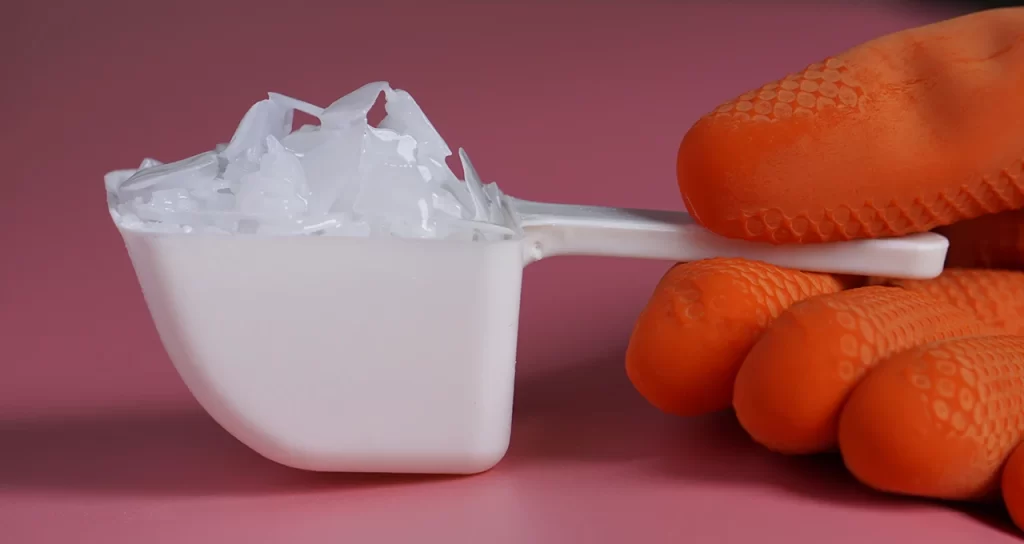
Caustic soda flakes uses Commercial name: caustic soda Caustic soda flakes CAS number: 1310-73-2 Caustic soda flakes chemical formula: NaOH /or HNaO Caustic soda flakes UN number: 1823 Caustic soda flakes synonyms: sodium hydroxide, sodium hydrate, white caustic, natrium hydroxyde, soda kaustische, natriumhydroxid, aetznatron, ascarite Caustic soda flakes ( sodium hydroxide ), with purity of 98-99%, with the appearance of white flakes, with the HS code: 28151100, are the major raw material in many various industries. Among another major caustic soda flakes uses, we can point out: production of sodium sulfide flakes. One of other caustic soda uses is in petroleum and drilling industry. Water treatment, ceramic making, alcohol making, leather making, cotton making, and oil drilling are other major caustic soda flakes uses. Sodium hydroxide is also used for neutralizing the acids in battery production.  Another caustic soda use is for olive sweetening. Mining companies, starch producers, and chemical manufacturers are also main caustic soda flakes users. Chemical Iran as one of the leading exporters of caustic soda flakes 98-99% and caustic soda lye 48-50% is eagerly ready to fulfill all caustic soda requirements of importers and end-users around the world. In order to get the latest prices of caustic soda flakes and caustic soda liquid, please send your detailed inquiry to sales(at)chemicaliran.com

Caustic Soda Flakes Uses Read More »

Mono Ethylene Glycol Global Market Structure Changes

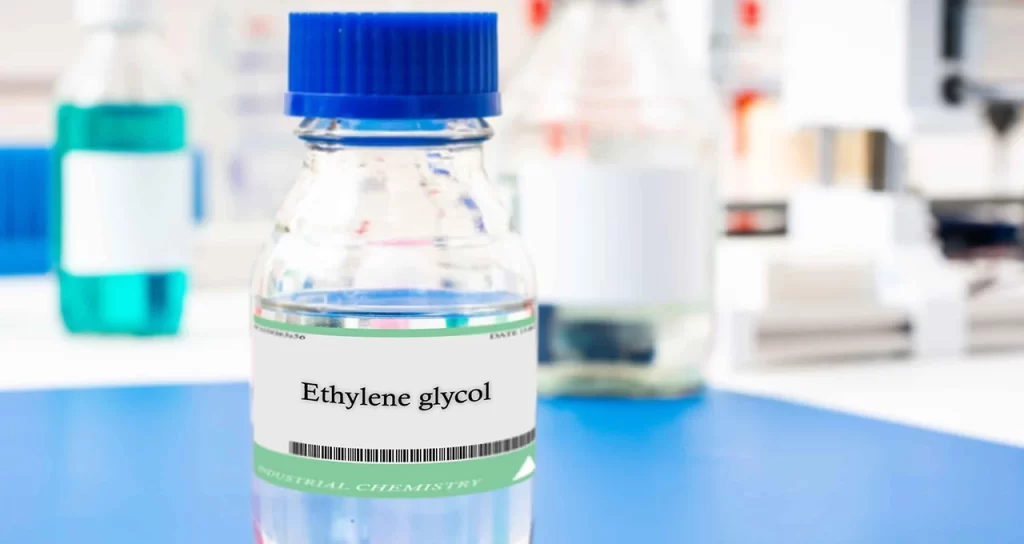
Mono ethylene glycol ( MEG ) is a colorless, odorless liquid manufactured from reaction of ethylene oxide and water. The main use of mono ethylene glycol is in PET manufacturing industry for fiber and bottle grades. Some small part is also used for antifreeze manufacturing. The global production capacity of mono ethylene glycol was about 33 million tons in 2017. The total production of mono ethylene glycol will increase to about 40 million tons up to 2020 as per the anticipations. The current production volume of mono ethylene glycol in Iran is 1.4 million tons, and it will increase to 3.4 million tons as per Iran government plans. The current mono ethylene glycol manufacturers in Iran include Shazand Arak, Farsa Chemie, Maroun, and Morvarid. As per the local reports, MEG consumption in Iran is about 230,000 MT per annum. The reports show that this volume will increase to about 450,000 MT per annum within 3 years if the government completes the plant projects that consume MEG. Therefore, with a simple calculation we can understand that about 2.5 million tons of mono ethylene glycol can be exported from Iran within the next 3 years. So, it is so important to investigate the global potential markets of mono ethylene glycol. In 2016, Iran exported 400,000 tons of mono ethylene glycol to China. This was only 7% of the import capacity of China. In the same year, all Middle East countries exported 4.8 million of mono ethylene glycol including Iran with 9% share. Import flow of mono ethylene glycol in China will continue for the future years. It is expected that the import volume of mono ethylene glycol in China will be around 10 million tons by 2026. Although, they have their own MEG manufacturing plants, but as they are developing new sites for PET and fiber, they will be still a big importer of mono ethylene glycol. Therefore, there is big potential for export of mono ethylene glycol from Iran to China with the target of around 1.5 million tons per annum in case the manufacturers provide the structure and match themselves with the market. It is necessary to consider the competitors as well. The regional competitors of Iran for export of mono ethylene glycol are Saudis and Kuwait. The investigations show that they will in total export 7 million tons of MEG within 3 years. The trans-regional competitors also include USA that is exporting 900,000 tons of MEG per annum. But these figures will change to 3 million tons per annum by 2026. Chemical Iran believes that although Iran manufactures 3.5% of total mono ethylene glycol of the world at the present time, and Saudis are producing 6 million tons of MEG, about 24% share of the global production, but in the coming years, Iran can increase the production capacity up to 3.4 million tons if the government completes the due projects. It is necessary to attention to this point that the market structure will change drastically in the short term future. There will be big competition among mono ethylene glycol manufacturers. Therefore, market investigation and market research should be among top priorities of the Iranian manufacturers in the petrochemical industry.

Mono Ethylene Glycol Global Market Structure Changes Read More »

Mining Chemicals – Chemicals Used In Mining

Mining Chemicals – Chemicals Used in Mining In this post you will study some of the most widely traded and used mining chemicals. Mine Explosives and Drilling Chemicals: Flotation in Mining – Collectors and Modifiers: There are many possible ways of categorizing sulfide collectors; e.g. copper collectors, lead collectors, soluble collectors, oily collectors, thiol collectors, etc. The terms “collector” and “promoter” are often used synonymously. Other reagents, which assist the adsorption of a collector on the mineral surface, are referred to as “activators”, and their use is also discussed below. Xanthate: Most widely used Xanthate in the flotation process in mining: Modifying Agents: a huge number of reagents usually referred to as “Modifying agents” are used in the flotation of sulfide ores. This is especially true in the case of complex ores, where two or more valuable minerals have to be separated from each other, e.g. Pb/Zn ores, Cu/Zn ores Cu/Pb/Zn ores, Cu/Mo ores, Cu/Ni ores etc. These modifying agents cover a variety of functions; for example, pH modifiers, depressants, activators and dispersants. pH Modifiers: Most minerals exhibit an optimum pH range for a given collector. While some minerals can often be floated at the natural pH of the ores, in most cases the pH has to be adjusted for maximum recovery and selectivity. The most widely used reagents for alkaline circuits are lime and soda ash. For acid circuit flotation, the most commonly used reagent is sulfuric acid. These three modifiers are generally the most cost-effective ones. Other pH modifiers are also used rarely when difficult separations are required. Common pH Modifiers: Depressants: Inorganic Depressants: The principal ones used and their typical applications are as follows: Activators: Certain minerals do not float well with the use of only a collector, but require prior activation. The most commonly used activators are: Dispersants: Many ores contain significant quantities of clay minerals and other “primary slimes”. These can have an adverse effect on flotation metallurgy. This can be due to a combination of factors such as, (a) increasing pulp viscosity, which adversely affects air bubble distribution, and froth drainage/mobility; (b) slimes can form a coating on the surface of valuable minerals thereby inhibiting their flotation.The usual practice for minimizing the aforementioned effect of “slimes” is to conduct the flotation at lower percent solids to reduce the pulp viscosity. However, this also reduces the effective residence time in the flotation circuit. Consequently the use of both inorganic and organic dispersing and viscosity reducing agents is commonly practiced. Sodium silicate, soda ash, various poly- phosphate.

Mining Chemicals – Chemicals Used In Mining Read More »

Paraffin Wax Uses – Paraffin Wax Applications

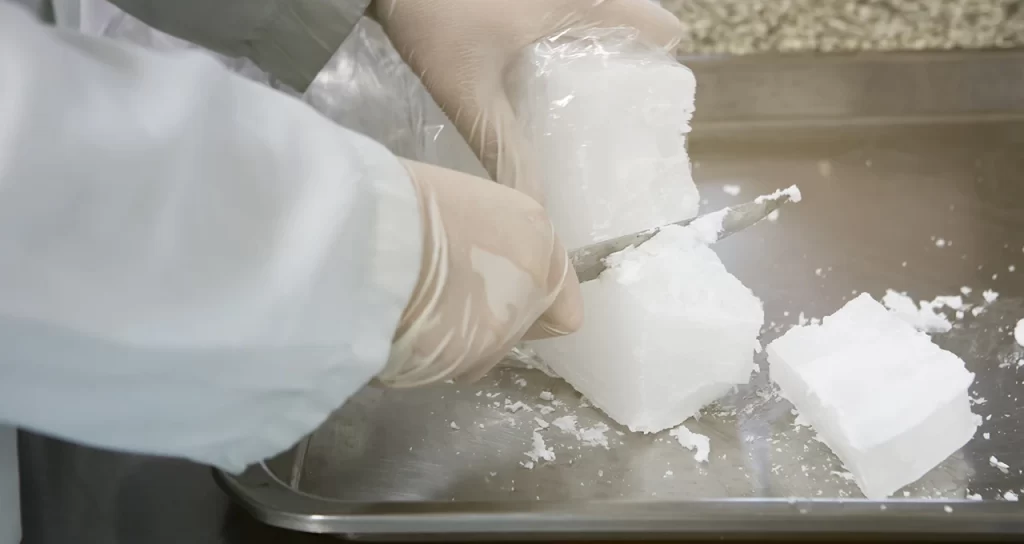
Paraffin wax Uses – Paraffin wax applications Paraffin wax CAS Number:  8002-74-2 Paraffin wax chemical formula: C21H27NO3 Paraffin wax synonyms: PARAFFIN IN PASTILLE FORM 51-53 PH EUR,B;PARAFFIN IN PASTILLE FORM 52-54 PH EUR,B;PARAFFIN IN BLOCK FORM 42-44 25 KG;PARAFFIN IN BLOCK FORM 46-48 1 KG;PARAFFIN IN PASTILLE FORM 56-58 PH EUR,B;PARAFFIN IN PASTILLE FORM 57-60 PH EUR,B;PARAFFIN IN BLOCK FORM 46-48 25 KG;PARAFFIN IN BLOCK FORM 42-44 1 KG Paraffin wax use in coatings: It is added to many candy coatings and chocolates to give the treats a shiny finish. It is also used to coat fruits and vegetables to extend shelf life by retaining moisture. Paraffin wax use in candles: Paraffin wax is popularly used in candle making process. Paraffin candles are odorless and bluish-white in color, burns more cleanly and are also more economical than other types of candles. Almost all types of candle can be made with paraffin wax. The melting point is the primary determinant of the type of candle you can make with it. Low melt point paraffin (less than 130F) is used for container candles in jars, cups or glasses Medium melt point paraffin (130F-150F) is used for candles that need to stand on their own – votives, pillars, and other molded candles High melt point wax (greater than 150F) is used for more special applications like hurricane candle shells, over-dipping, and other special candle making applications. Paraffin wax use in cosmetics: Cosmetically, paraffin wax is often applied to the hands and feet. The wax is a natural emollient, helping make skin supple and soft. When applied to the skin, it adds moisture and continues to boost the moisture levels of the skin after the treatment is complete. It can also help open pores and remove dead skin cells. That may help make the skin look fresher and feel smoother. Therapeutic benefits Paraffin wax may be used to help relieve pain in the hands of people with: Osteoarthritis Rheumatoid arthritis Ffibromyalgia Other joint mobility issues It acts like a form of heat therapy and can help increase blood flow, relax muscles, and decrease joint stiffness. Paraffin wax can also minimize muscle spasms and inflammation as well as treat sprains. Paraffin wax uses in crayons: It is the primary ingredient in crayons that gives them their waxy texture. The wax, mixed with color pigments, is poured into a mold to form the crayon. Paraffin wax use in matches: Paraffin is naturally water resistant. Paraffin wax coatings can be applied to a variety of products to make them waterproof, including matches, wood and bottles. To make your own waterproof matches, dip the match head in melted paraffin wax, remove it from the wax and blow on it to cool and harden the wax quickly. Paraffin wax use in rubber: In order to prevent rubber from being cracked with air or sun light, it is formerly known that a wax-based antioxidant is used in rubber. When the wax-based antioxidant is blended with rubber, the antioxidant oozes out onto the surface of rubber and forms a thin film thereon. This thin film prevents the rubber from contacting ozone, and thus prevents degradation thereof. Paraffin wax uses as friction reducer: Since paraffin wax has lubricating properties, it is applied to a variety of products to reduce friction. Snowboarders, skateboarders and surfers apply paraffin wax to the bottom of their boards to help them glide easier. Paraffin wax uses as moisturizer : A number of toiletries and cosmetic products contain paraffin wax as a moisturizing agent. As paraffin wax is potentially comedogenic and may lead to acne or pimples, such moisturizers are usually recommended for those with very dry skin. Paraffin wax use in paint: Among the plethora of additives available today, waxes have a significant impact on many formulations or processes. Even if used in relatively small quantities – typically below 3% solids content of the total composition – waxes impart or improve effects as various as slip and lubrication, abrasion resistance, anti-blocking, matting and water repellency – all critical properties in the coating and ink areas. Hence, waxes are often classified as surface conditioner additives. Wax is also added to paper products to keep things from sticking to it. Chewy candies are often wrapped in wax coated paper to make them easy to unwrap. Wet waxing (aka wax bath): A sheet of paper is immersed in the wax Roll-on or dry waxing: Wax is rolled on the sheet of paper using rollers Laminating: Wax is applied to printed paper and is used to bond two substrates together, such as foil to paper or paper to paper.

Paraffin Wax Uses – Paraffin Wax Applications Read More »

Sodium Sulfide Manufacturing Methods And Applications

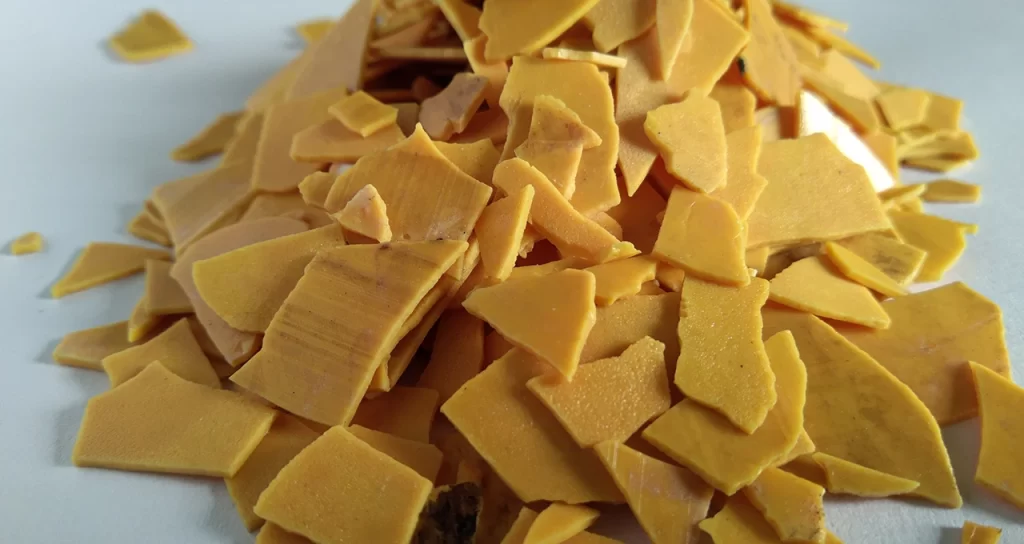
Sodium sulfide production methods: Sodium sulfide (Na2S) is a yellow to red solid material soluble in water, slightly soluble in alcohol. It is a strong reducing agent and reacts with oxidant. No commercial process for the production of sodium sulfide containing neither water nor iron is known. The commercially available sodium sulfide is in every case produced by reduction of sodium sulfate, usually by means of carbon, but also by means of hydrogen and other reducing gases. Reduction with carbon yields a crude melt, which contains, in addition to sodium sulfide, considerable amounts of impurities and by-products such as unreacted carbon, ash constituents, impurities from the carbon, carbonates, sulphites, sodium thiosulfates, and iron compounds. This crude melt is usually extracted with water so that the water-soluble part of the impurities and considerable amounts of iron pass into the extraction liquor. Other reactions take place subsequently in the aqueous solution, and these lead to undesirable by-products. by evaporating the extraction liquor, either crystals of the composition Na S.9H O are obtained or with further evaporation, a product containing 60% of Na S solidifies from the melt. Both hydrates, namely the hydrate crystallising from the solution and containing 32% of Na S, contain considerable amounts of soda, sulfite, thiosulfate, sulfate, and iron salts. The commercially available substance containing 60% Na is colored a dark reddish brown by the iron and can scarcely be used for certain purposes such treatment of textiles. It is not technically or economically possible to reduce the residual 40% of water content by further evaporation on account of the extraordinarily steep rise in the melt temperature above 60% of Na-S and since a suitable material for use in making the necessary apparatus which is resistant to concentrated sodium sulphite melt is unknown. Even evaporation to only 60% of Na S necessitates the use of apparafus made from expensive special alloys or causes heavy wear on other materials. A process has now been discovered for obtaining a sodium sulphide of excellent purity by reduction of sodium sulphate with carbon or other reducing agents, which sulphide is in particular free from iron and water. The process is based on the fact that anhydrous sodium sulphide, unlike the hydrate, dissolves readily in alcohols. Claim1: In a process for the production of pure anhydrous sodium sulfide free from iron, the step which comprises heating the melt obtained by reduction of sodium sulfate with carbon and which contains impurities resulting from the reduction process, with an alcohol, filtering the sodium sulfide solution thereby formed and recovering the sodium sulfide from the said solution by evaporating the alcohol. It is known that sodium hydroxide may be reacted with H2S to form Na2S which may be treated with more H2S to convert Na2S to NaHS, and it has been proposed to make sodium hydrosulfide by gassing an Na2S-NaHS liquor with pure hydrogen sulfide. In processes of the type to which the invention relates, the source of sodium is commercial caustic soda which contains appreciable quantities of impurities, such as iron, copper, nickel, manganese and silicon. These impurities do not discolor caustic soda to any great extent, and hence their presence in commercial caustic is unobjectionable. However, during H2S gassing of commercial caustic liquor, such impurities pass thru the process and are carried into the resulting NaHS liquor. Such impurities may be present in the NaHS liquor as soluble salts or suspended in finely divided condition. While probably largely sulfides, exact compositions of the impurities are not known, and whatever their nature, these subtances are referred to herein as metallic impurities. The presence of even small amounts of these impurities in Na2S or NaHS solutions results in products of very poor appearance because of the highly colored nature of the impurities after having been subjected to H2S gassing. Accordingly, a major problem presented in manufacture of relatively pure sodium hydrosulfide has been the elimination of such impurities. Commercially available hydrogen sulfide gases contain appreciable amounts of carbon dioxide as an impurity. Claim2: the method for producing purified sodium sulfide from a sodium hydrosulfide liquor containing (a) at least one metallic impurity of the group consisting of iron, copper, nickel, manganese, and silicon, and (b) an amount of available carbonate of sodium equivalent to more than 0.06% by weight of CO3 radical, which method comprises treating said liquor with an alkaline earth compound so as to react with available carbonate of sodium to precipitate combined CO3 thereof as alkaline earth carbonate, the amount of said alkaline earth compound being at least sufficient to reduce the available carbonate of sodium content of said liquor to an amount equivalent to not more than 0.06% by weight of CO3 radical, controlling the composition of the resulting liquor so that such liquor contains not more than 5% by weight of sodium sulfide, thereby effecting coagulation and precipitation of metallic impurities, and separating said metallic impurities from such liquor. Claim3: The method for producing purified sodium sulfide from a sodium hydrosulfide liquor containing (a) metallic impurities of the type present in commercial sodium hydroxide, and (b) an amount of available carbonate of sodium equivalent to more than 0.06% by weight of COA radical, which method comprises treating said liquor with an alkaline earth compound so as to react with available carbonate of sodium to precipitate combined Cos thereof as alkaline earth carbonate, the amount of said alkaline earth compound being at least sufficient to reduce the available carbonate of sodium content of said liquor to an amount equivalent to not more than 0.06% by weight of Cos radical, controlling the composition of the resulting liquor so that such liquor contains not more than 5% by weight of sodium sulfide, thereby, effecting coagulation and precipitation of metallic impurities, and separating said metallic impurities from such liquor. Sodium sulfide applications: Sodium sulfide is one of the main chemicals and raw materials in so many industries such as mining industry, leather industry, metallurgy industry, textile industry, dyes and intermediates, pulp and paper, soda ash manufacturing, metal refining industry. Sources: http://www.freepatentsonline.com https://patents.google.com

Sodium Sulfide Manufacturing Methods And Applications Read More »

How to Purchase and Import Chemicals from Iran? (Barriers and Solutions)

With respect to be located in one of the most strategic regions in the world, having good access to major commercial ports, railway stations and land roads in the world, high quality of the manufactured chemical raw materials and petrochemical products, and competitive prices which can beat so many other manufacturers in the world, there are thousands of big and medium importers around the world especially in India, East Africa, South Asia, Europe and South America which are willing to buy chemicals and petrochemical products from Iran. But, they have worries that how can they purchase from Iran in a smooth way? And how can they receive their purchased products in a safe way? The fact is that all the companies in the field of leather, textile, mining industries, metallurgy, agriculture, fertilizer manufacturing, chemical manufacturing, refinery, oil and gas, food production, metal refining, alumina refining, lubricant manufacturing, detergent manufacturing, cosmetics manufacturing, construction, water treatment, candle and match manufacturing, paint and dyes manufacturing can benefit from high quality Iran origin chemical raw materials with competitive prices, but how? The first barrier for the customers is banking transactions: Almost all the major banks in the world refuse to do transactions with Iranian banks due to U.S. sanctions. Besides, almost none of Iranian manufacturers have any offshore company or bank account. So, as almost all Iranian chemicals manufacturers sell their products on EXW basis with the payment term of 100% cash in advance, it is impossible to buy from Iran on L/C, D/P, or any other credit basis. How can Chemical Iran solve banking issues? With accurate and exact study of the political and economical situation in the region, we decided to establish our strong partner company in Dubai. We arrange all our banking transactions and shipping documentation through our partner company outside Iran. Therefore, we are pleased to inform you that we can receive payments in EUR/USD/AED in our Dubai partner company without any limitation. We export two types of products; A- our own manufactured products B- the products we supply from governmental factories. With all governmental and private chemical and petrochemical complexes of Iran that we supply from, we set local contract through our local company national ID, with all the required terms and conditions of our local regulations. The arbitration of the contract will be Iran Judiciary Organization. First of all, it has been almost a decade, we have been manufacturing, trading and exporting chemicals from Iran. So, not only we have deep knowledge of each factory one by one, but also we have strong business relationship with all our Iranian giant and top manufacturers. So, fortunately, with proven track record of export of tens of thousands of chemicals to 3 continents of the world, we have never had any unsolvable experiences with any of our partner manufacturers. By the way, if any corruption or breach of contract happens by the manufacturer, we can easily make complaint and close their factory through our professional lawyers until they fulfill their commitments due on the contract. Therefore, our customers can be 100% assured that their payments will be totally safe with us. All of our customers can experience a smooth business with Iran through our company as their loyal partner. The second barrier is shipping cargoes out of Iran: Firstly, almost all major shipping lines have stopped their services after re-imposed invaded U.S. sanctions of Iranian ports. Secondly, almost all Iranian chemical and petrochemical manufacturers and refineries sell their products on EXW factory basis in bulk, and it is very difficult for foreign customers to make their shipments out of Iran as it is almost impossible for them to communicate with local transportation and packaging/drumming companies in Iran. How can Chemical Iran ship chemicals out of Iran? Depending on the port of destination, all our sea shipments will be transhipment or cross-stuffed via Jebel Ali Port of UAE or ports of Turkey. So, we are pleased to inform you that we can deliver all your orders in any region in the world by vessel, train or truck through the fastest smoothest and most cost-effective routes.   Shipping documents including commercial invoice, packing list, certificate of analysis, and certificate of origin will be issued on our beneficiary Dubai company letterhead. We also have the ability to design and print customized packaging for our strong customers upon solo partnership contracts. Chemical Iran manufactures, supplies and exports so many strategic chemicals and petrochemical products such as Caustic Soda Flakes 98-99%, Caustic Soda Lye 48-50%, Sodium Sulfide Yellow Flakes 60±2%, Mono ethylene glycol (MEG), Paraffin wax (1-3%)(3-5%)(5-7%), and Mono ethanol amine. It would be our honor to inform you that we can be your loyal chemical partner in Iran in order to fulfill all your chemicals and raw materials requirements, so that a dream of smooth business with Iran can come true for your esteemed company. In order to get any further information about our products, please do not hesitate to send us an email: sales@chemicaliran.com

How to Purchase and Import Chemicals from Iran? (Barriers and Solutions) Read More »

Product Enquiry

Scroll to Top